Shawarma vs. Kebab: The Real Differences You Need to Know

The Great Culinary Debate
Walk into any Middle Eastern restaurant in Kuala Lumpur and you will inevitably find two words dominating the menu: Shawarma and Kebab. While many diners use these terms interchangeably, they refer to distinctly different cooking traditions, meat cuts, and culinary histories.
Understanding these differences is the key to unlocking the true depth of Middle Eastern street food. Here is your definitive guide to the real differences between shawarma and kebab.
1. The Broader Umbrella of Kebab
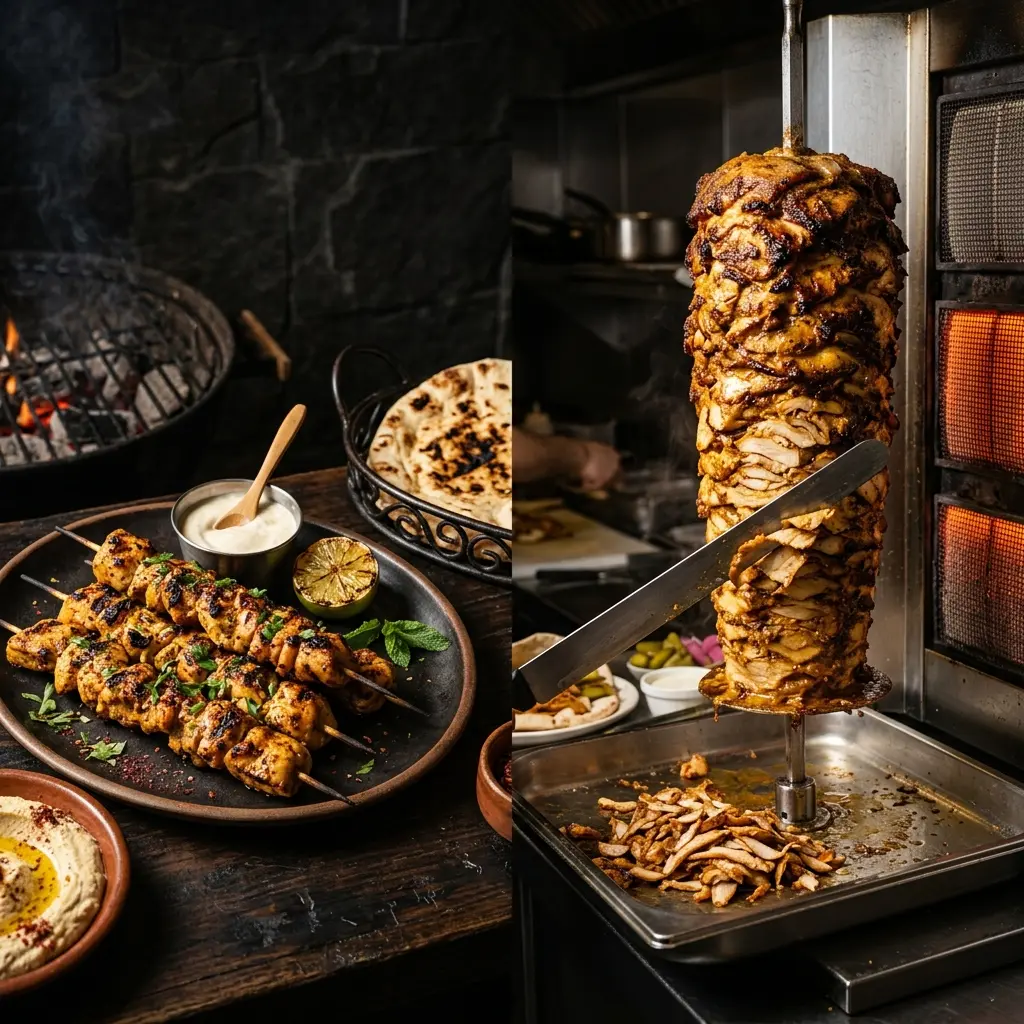
The term "kebab" is a much broader and more comprehensive word. In fact, in many parts of the world—like Germany, the UK, and Australia—people refer to vertical spit-roasted meat as "doner kebab". Historically, kebab refers to a massive family of grilled meat dishes, spanning shish kebabs (skewered cubes of marinated meat), kufta kebabs (seasoned ground meat molded onto skewers), and various charcoal grills.
In contrast, shawarma refers specifically to a vertical cooking technique. The word comes from the Turkish *çevirme*, meaning "turning". It is made by stacking thin layers of seasoned meat (chicken, beef, or mutton) on a vertical spit that rotates slowly in front of a heat source, shaving off tender ribbons of meat as the outer layer cooks.
2. Why We Highlighted "Kebab" in Kebabjoy
At Kebabjoy, we intentionally chose to put "kebab" in our brand name rather than just "shawarma". Our ambitious expansion plan is to go far beyond just wraps. We want to bring a broad spectrum of Middle Eastern grilled items—chargrilled skewers, juicy kufta, and authentic mixed grills—to Malaysia and East Asian markets, maintaining the same premium quality and modern fast-casual speed.
3. Serving Style and Traditions
How the meats are served is also highly regional. Levantine shawarma is famously wrapped in thin, crispy Saj bread. Egyptian style, however, introduces soft, warm Kaiser buns mixed with tahini, fresh tomatoes, and parsley. Kebabs, on the other hand, are traditionally plated as larger skewered meals alongside spiced rice, roasted vegetables, and garlic dip.
The Verdict: If you want slow-cooked, vertical rotisserie meat shaved into juicy ribbons, go for a Shawarma Wrap or Bun. If you want chargrilled, smoky chunks of seasoned skewers or ground meat, a Kebab Plate is your go-to.